
Every year, Boston winters test properties in ways that catch even experienced owners off guard. A nor’easter drops two feet of snow overnight. Temperatures swing from 40°F to single digits within days. Ice dams build silently along rooflines while gutters buckle under the weight. The damage these conditions cause — to roofs, windows, foundations, and interiors — is rarely dramatic in the moment. It’s gradual, hidden, and almost always more expensive than it needed to be because no one caught the warning signs in time.
Whether you own a single-family home in Dorchester or a commercial building in Downtown Boston, the steps you take before the season starts determine how well your property holds up when the storms arrive. In the sections below, we cover the most common sources of winter damage — from ice dams and gutter failure to broken glass and vulnerable vacant properties — and what you can do right now to get ahead of each one.
Why Are Ice Dams Such a Big Problem for Boston Properties?
Ice dams form when heat escaping from an attic melts snow on the roof. That meltwater runs down to the colder eaves, refreezes, and builds a ridge of ice that traps more water behind it. Eventually, that trapped water finds its way under shingles and into the home — and once it does, the damage can be significant and far-reaching.
According to the Insurance Institute for Business & Home Safety, ice dams are one of the leading causes of winter water damage claims in the Northeast. Once water gets behind a roofline or into a wall cavity, it can cause rot, mold, and interior ceiling damage long after the storm has passed. In severe cases, prolonged moisture exposure leads to structural deterioration that takes months and thousands of dollars to fully remediate.
The most effective way to fight ice dams starts in the attic. Adding adequate insulation reduces the amount of heat escaping through the roof deck, which is the root cause of snow melting unevenly. Alongside insulation, proper attic ventilation keeps roof surface temperatures consistent from ridge to eave, so snow melts evenly rather than pooling at the edges and refreezing. During and after major storms, using a roof rake to pull heavy snow away from the eaves before it has a chance to compact is one of the simplest and most impactful things a Boston homeowner can do. For roofs that are prone to heavy ice buildup year after year, installing heat cables along the eaves provides an additional layer of active protection that helps keep water flowing freely instead of freezing in place.
Should I Clear Gutters Before Winter?
Gutters play a bigger role in winter property protection than most people realize. When gutters are clogged with leaves and debris heading into the cold season, melting snow and rain have nowhere to go. Water backs up, freezes, and adds weight to an already stressed roofline. Over time, this pulls gutters away from the fascia, damages the soffit, and creates perfect conditions for ice dam formation right at the roofline.
Cleaning gutters in late October or early November — before the first hard freeze — gives water a clear path away from the structure. Downspouts should be checked and extended if necessary to move water at least a few feet away from the foundation. Standing water near the foundation that freezes and thaws repeatedly can crack masonry and lead to basement moisture problems, so directing that flow properly matters well beyond the roof itself.
How Can I Protect My Windows and Doors Before a Winter Storm?
Windows and doors are often the weakest points in a property’s defense against wind-driven snow and ice. Older seals, cracked frames, or loose glazing let cold air in and create pathways for moisture damage. A drafty window isn’t just an energy efficiency problem — it’s a vulnerability that can worsen quickly once temperatures drop and wind speeds climb.
Before winter sets in, check every window and exterior door for drafts, gaps, or visible cracks. Re-caulk and weatherstrip as needed. Pay special attention to older wood frames that may have shrunk or warped over time, as these are particularly prone to air and water infiltration. Storm windows, if your property has them, should be cleaned, inspected for broken seals, and installed before temperatures fall below freezing.
If you have commercial storefront glass or older residential windows that are already compromised, it’s worth understanding the differences in commercial vs. residential glass repair before a storm forces the issue. Commercial glass often involves different code requirements and urgency levels than residential windows, which matters when a storm is already underway. Addressing weak glass before the season starts keeps you in control of the timeline and the cost.
What About Trees and Overhanging Branches?
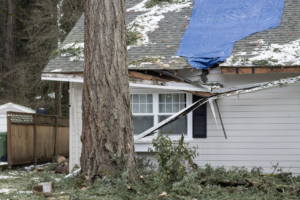
One of the most overlooked winter hazards for Boston properties is the trees surrounding them. Ice storms in particular can turn a healthy-looking branch into a serious projectile. When ice accumulates on branches, the added weight can cause them to snap without warning — sending debris through windows, onto roofs, or across driveways.
Before winter arrives, have an arborist or licensed tree service inspect any large trees near your building. Branches that hang directly over the roof, close to windows, or above power lines should be trimmed back. Dead or weakened limbs are especially dangerous and should be removed before the first major storm, not after. This is a relatively low-cost preventive step that can save a significant amount in storm damage repair.
What Should I Do If a Storm Damages My Roof or Windows?
Even with the best preparation, Boston winters can still cause sudden damage — a fallen branch through a window, a roof section that gives way under snow load, or a door frame that cracks in freezing temperatures. When that happens, speed matters.
A damaged opening left exposed overnight invites more than just cold air. It lets in snow, water, and in the case of vacant or lightly occupied properties, unwanted visitors. Interior water damage from a single storm night can ruin flooring, drywall, insulation, and personal belongings — all of which compound the original repair cost significantly. That’s where emergency board-up services come in. A fast, professional board-up seals the property, limits further water intrusion, and buys time for permanent repairs once the weather clears.
It’s also a good idea to document all damage with photos as soon as it’s safe to do so. Thorough documentation supports insurance claims and helps contractors assess the full scope of repairs needed once conditions improve.
Do I Need Temporary Fencing During Winter Storm Recovery?
If a storm causes significant structural damage — such as a partial roof collapse or a major wall breach — a board-up alone may not be enough. Exposed debris fields and unstable structures can pose real safety risks to neighbors, pedestrians, or anyone passing the property. In dense Boston neighborhoods, where properties sit close together and foot traffic is high, that risk is amplified.
In these cases, temporary fencing helps secure the site while repairs are underway. It creates a clear perimeter that keeps people at a safe distance from hazardous conditions, and it signals to insurers and inspectors that the property is being actively managed. This is especially important for commercial properties or multi-unit buildings where foot traffic is harder to control and liability exposure is greater.
How Do I Protect a Vacant or Seasonal Property Over the Winter?
Vacant and seasonal properties face a unique set of risks during the winter months. An unmonitored building is more vulnerable to both storm damage and opportunistic vandalism or break-ins, since there’s no one on-site to catch problems early. A burst pipe, a damaged window, or a roof breach can go unnoticed for days or weeks, allowing damage to compound far beyond what a quick response would have caused.
If you’re leaving a property empty for part of the winter, there are several steps worth taking before you go. Shut off the water supply and drain the pipes to prevent freezing and burst pipes. Set the thermostat to at least 55°F if the heating system will remain active, and have a trusted neighbor, property manager, or service provider check on the building after major storms.
For properties in higher-risk areas or those that have experienced break-ins before, it’s worth reviewing how vandalism and vacant property protection measures — like boarding and routine security check-ins — can reduce risk while you’re away. A boarded property is a significantly harder target than one with accessible, unprotected windows and doors.
What Role Does Freeze-Thaw Cycling Play in Winter Damage?
Beyond single storm events, the repeated freeze-thaw cycles that Boston experiences throughout winter cause gradual but serious damage to masonry, concrete, and building exteriors. Water seeps into small cracks in brick, mortar, or concrete, then expands as it freezes. Over dozens of freeze-thaw cycles across a single season, those small cracks become large ones.
Inspect the exterior masonry of your building before winter and seal any visible cracks with an appropriate masonry sealant. Pay close attention to chimney mortar, foundation walls, and any exposed concrete walkways or steps adjacent to the building. Sealing these vulnerabilities before the first freeze prevents water from getting in and turning a hairline crack into a structural problem by spring.
Contact Boston Board Up for Emergency Board Up Services!
Call Boston Board Up at (800) 949-9113 for 24/7 emergency response today.

